
Zoroastrianism

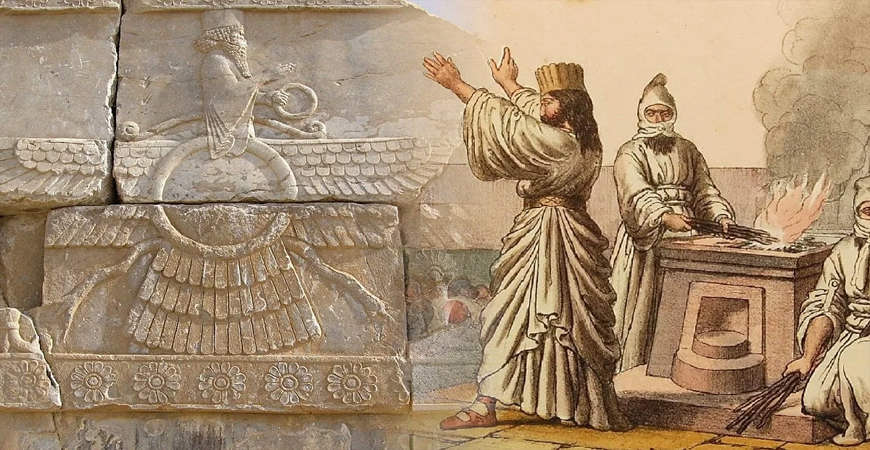
Zoroaster and Zoroastrianism: The Origin of Persian Philosophy and Faith
Zoroaster, also known as Zarathustra, was an Iranian prophet, philosopher, and poet who founded Zoroastrianism—one of the world’s oldest monotheistic religions. His teachings shaped not only Persian spirituality but also influenced global philosophical thought for millennia.
Zoroaster taught that life is a constant battle between good and evil, where every human being has the freedom to choose their path. This moral freedom, granted by Ahura Mazda (the Wise Lord), forms the essence of his philosophy. Humanity, according to him, must consciously side with the forces of light and truth to defeat darkness and deceit.

The Life and Origins of Zoroaster
The exact time and place of Zoroaster’s life remain uncertain. Traditional accounts suggest he lived “258 years before Alexander” or even “5000 years before Xerxes,” but modern scholars generally place him around 1000 BCE in northeastern Iran. Various sources cite Azerbaijan, Sistan, and Rey as possible birthplaces.
His own words are preserved in the Gathas, a series of poetic hymns forming the oldest and most sacred part of the Avesta, the Zoroastrian holy book. In these verses, Zoroaster appears as a wise seeker chosen by divine inspiration to guide humanity away from false deities and toward truth, purity, and wisdom.
He emphasized that moral choice defines human existence. Every person has the divine freedom to stand with light or succumb to darkness—a choice that determines both earthly life and eternal destiny.
Zoroaster’s Philosophical Legacy
Zoroaster is often called the world’s first philosopher. His doctrine of dualism—the eternal struggle between good and evil—became a cornerstone of Iranian thought and profoundly influenced Greek and later Western philosophy.
He was also among the first thinkers to address the problem of evil through a rational framework, arguing that evil exists because humans are free to choose it, not because it was created by God.
Throughout history, people of many cultures—Greeks, Romans, Christians, Muslims, and even modern thinkers—have revered or reinterpreted Zoroaster in their own ways. His teachings inspired various religious movements such as Manichaeism, Babism, Baha’i Faith, Ahmadiyya, and Mazdaznan. Even Mani, the founder of Manichaeism, claimed to be completing Zoroaster’s divine mission.
Zoroaster in Persian Literature
Zoroaster’s presence in Persian literature has always been significant yet controversial. The poet Daqiqi, who began writing about Zoroaster in the Shahnameh (Book of Kings), was reportedly killed before completing his work—possibly due to his sympathy toward Zoroastrianism.
Later, Ferdowsi, the great Persian epic poet, continued Daqiqi’s verses in the Shahnameh, preserving the story of Zoroaster and the spread of his faith. Ferdowsi described Zoroaster as a noble and enlightened figure, representing wisdom, purity, and divine mission.
Zoroastrian themes such as love, light, and spiritual intoxication frequently appear in Persian poetry. One well-known legend tells that after King Goshtasp accepted Zoroaster’s faith, a “sacred cypress tree” descended from heaven and was planted near the first fire temple in Kashmar—a symbol of divine approval and everlasting life.
The Enduring Influence of Zoroastrianism
Zoroastrianism remains a profound spiritual and philosophical legacy that continues to inspire people worldwide. Its emphasis on truth, moral responsibility, and freedom of choice laid the foundation for later religions and ethical systems.
Zoroaster’s message—“Good Thoughts, Good Words, Good Deeds”—still resonates as one of the most timeless calls to human goodness.

 All products

