Barbat – Oud Instrument

Oud Instrument: History and Significance in Iranian and Middle Eastern Music
The Barbat, also known as the Oud or Roud, is a traditional Iranian string instrument widely used across the Middle East and North Africa. Revered for its rich, warm tones, the Oud has played a significant role in the development of both Persian and Arabic music.

Historical Origins
Archaeological evidence suggests that the Barbat/Oud dates back over 5,000 years to the Sumerian civilization in the city of Ur. Ancient Egyptian paintings from around 2,000 years ago also depict musicians playing a similar instrument. Over centuries, the Barbat traveled across the Middle East, including pre-Islamic Iran and Saudi Arabia.
Prominent Iranian Barbat musicians in history include Barbad, Bamshad, Nakisa, and Ramtin, who contributed significantly to Persian music.
Spread Across the Islamic World
After the rise of the Islamic Caliphate, the Barbat evolved and spread across the Islamic world, from China to Andalusia. During the reign of Abd al-Rahman II in Andalusia, a musician named Kamal al-Din Zaryab introduced the Barbat to Spain, where it was further developed and eventually influenced the creation of the modern guitar.
This legacy is celebrated in Spain, and Paco DeLucia, the renowned guitarist, composed a piece titled Zaryab in memory of this historic transformation.
Name and Etymology
The Arabic name Oud comes from the Persian word “Roud”, meaning string. While the Barbat was historically central to Persian music, today its role is smaller compared to the Arabic Oud, which remains a primary instrument in Arabic music. When introduced to Europe, the instrument became known as the Lute.
Structure and Features
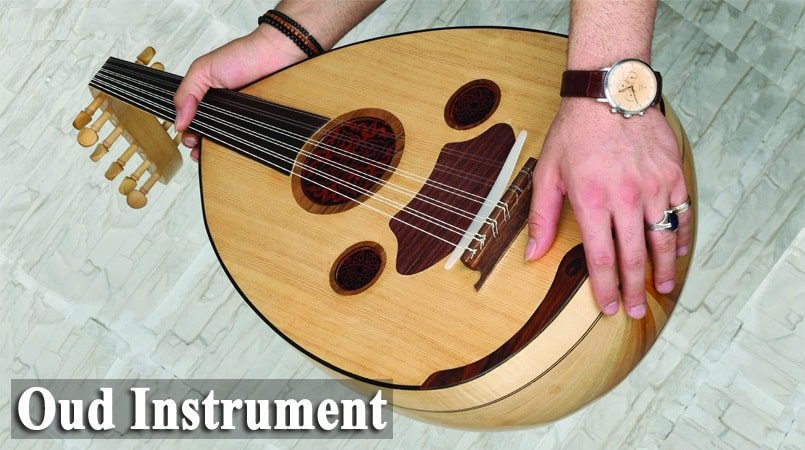
The Oud/Barbat has a distinct pear-shaped body with a short neck, where most of the string length runs along the body. The upper surface is crafted from wood and often features latticework openings. Traditionally, the Barbat has ten strings arranged in five pairs, though some musicians experiment by adding one or two extra strings at the bottom, tuned below the Fa note.
The sound of the Barbat is soft yet warm and resonant, making it suitable for both solo performances and symphonic compositions. Its melodic versatility and expressive tones continue to captivate audiences worldwide.
Cultural Significance
The Oud/Barbat represents more than just a musical instrument; it is a symbol of Iranian and Middle Eastern cultural heritage. From ancient courts to modern concerts, it has influenced countless musicians and contributed to the evolution of regional music traditions.

 All products

