The Timeless Beauty of Firoozeh Koobi: The Persian Art of Turquoise Inlay

The Timeless Beauty of Firoozeh Koobi: The Persian Art of Turquoise Inlay
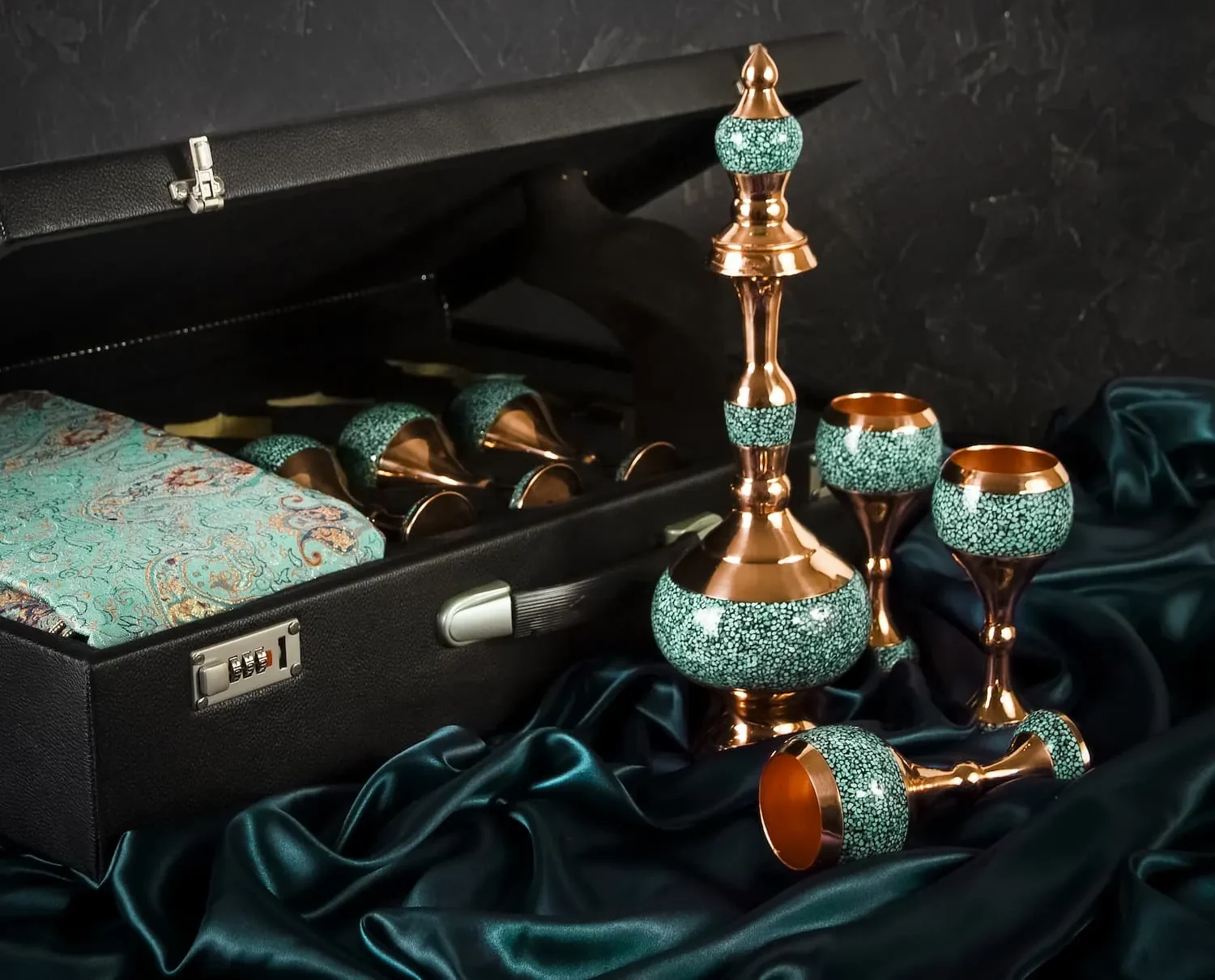
Among the most enchanting Persian handicrafts, Firoozeh Koobi (Turquoise Inlay Art) shines as a perfect fusion of beauty, tradition, and craftsmanship. With its shimmering shades of blue and green, turquoise has long been a symbol of purity, protection, and prosperity in Persian culture. The art of Firoozeh Koobi in Iran reflects centuries of history — where creativity meets spirituality and elegance meets endurance.
A Glimpse into the History of Firoozeh Koobi
The story of Firoozeh Koobi begins in ancient Persia, where turquoise was treasured not only as a gemstone but as a spiritual talisman. For thousands of years, Persian artisans have adorned metal and copper objects with fragments of turquoise — creating masterpieces that embody both cultural heritage and artistic precision.
The craft flourished especially in cities like Nishapur, Isfahan, and Yazd, regions famous for their rich turquoise mines and exceptional artisans. Nishapur, home to the world’s finest Persian turquoise, remains the beating heart of this art form. Here, skilled craftsmen transform simple materials into dazzling symbols of Persian identity.
Cultural and Spiritual Significance of Persian Turquoise
In Persian culture, turquoise — or Firoozeh — represents victory, peace, and divine protection. Its radiant color mirrors the Persian sky and embodies serenity and eternal beauty.
Ancient Persians believed that turquoise could ward off misfortune and bring success to its owner. That’s why kings, warriors, and nobles adorned their crowns, swords, and palaces with this precious stone. Even today, Persian turquoise jewelry continues to symbolize good fortune and elegance, treasured by collectors and art lovers across the world.
The Artistic Process: From Stone to Masterpiece
The making of a Firoozeh Koobi piece is a delicate dance of patience, precision, and passion.
Each stage — from selecting raw turquoise stones to setting them by hand — requires expertise passed down through generations.
1. Selecting the Perfect Stone
Artisans carefully choose the highest-quality turquoise, looking for stones that are smooth, evenly colored, and free of imperfections. The vibrant hues of Persian turquoise — from deep sky-blue to sea-green — define the overall brilliance of the final work.
2. Inlaying the Turquoise
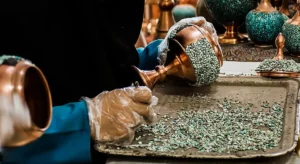
Once prepared, the artisan begins embedding tiny turquoise fragments onto a copper, silver, or brass surface. Using a special adhesive, each stone is meticulously placed by hand to create intricate, mosaic-like patterns. This process can take days or even weeks depending on the size and complexity of the piece.
3. Polishing and Finishing
After the stones are securely set, the surface is polished until smooth and glossy, revealing the mesmerizing contrast between the shimmering turquoise and the metallic base. The result is a one-of-a-kind piece that radiates both craftsmanship and Persian artistry.
Popular Applications of Firoozeh Koobi
Firoozeh Koobi is widely used in both decorative and functional Persian crafts, blending traditional charm with modern aesthetics.
Jewelry: Rings, Necklaces, and Bracelets
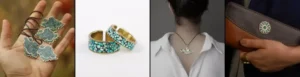
Persian turquoise jewelry is a timeless expression of sophistication. From Firoozeh Koobi rings to pendants and bracelets, each piece carries the essence of Persian heritage. The deep blue stones combined with hand-laid inlay work make every jewel a miniature work of art. You can explore authentic handcrafted turquoise jewelry collections at EliPersia.com — where artisans preserve this ancient art with contemporary design.
Home Décor: Vases, Bowls, and Trays
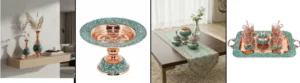
Firoozeh Koobi décor items — such as vases, plates, mirrors, and trays — bring a touch of Persian luxury into any living space. They serve as both functional items and conversation pieces, adding a unique glow and cultural charm to your home. Each product tells a story — a story that connects modern households to the heart of Persian artistry.
Festive and Cultural Use
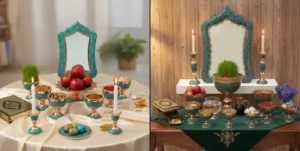
During Nowruz, the Persian New Year, turquoise dishes and ornaments often adorn the Haft-Seen table, symbolizing peace, health, and prosperity for the coming year. The presence of turquoise during this celebration reflects its role as a timeless emblem of renewal and joy.
How to Care for Your Firoozeh Koobi Pieces
Firoozeh Koobi is delicate by nature. To preserve its shine and structure:
- Clean gently using a soft, damp cloth and mild soap. Avoid chemicals, perfume, or direct sunlight.
- Store carefully in a padded box to prevent scratches or damage.
- Avoid exposing turquoise to extreme temperatures or moisture, as it can alter the color over time.
With proper care, your Persian turquoise art will remain radiant for generations.
Where to Buy Authentic Firoozeh Koobi Art
If you’re looking to own a piece of Persian tradition, EliPersia.com offers a curated selection of authentic Firoozeh Koobi jewelry and décor, handcrafted by master artisans in Iran. Each piece is made with genuine Nishapur turquoise and high-quality materials, ensuring both authenticity and lasting beauty.
EliPersia provides worldwide shipping, secure packaging, and the assurance that every item reflects the true essence of Persian craftsmanship.
Final Thoughts: The Eternal Charm of Persian Turquoise
The art of Firoozeh Koobi captures more than beauty — it preserves a legacy. Each turquoise stone carries whispers of Persian history, tradition, and the creative spirit that has endured for centuries.
Owning a piece of Firoozeh Koobi is like holding a fragment of Persia itself — vibrant, soulful, and timeless.
To explore genuine handcrafted Firoozeh Koobi items and turquoise jewelry, visit EliPersia.com and bring a piece of Persian artistry into your home.

 All products

