
Bote Jeghe – Paisley or Paisley Pattern

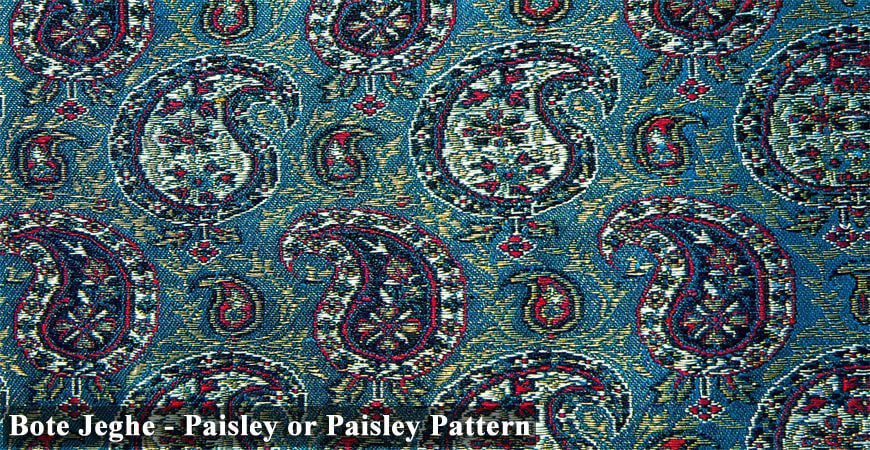
Bote Jeghe – The Timeless Persian Paisley Pattern
Bote Jeghe, also known as the Paisley pattern, is one of the most iconic and enduring symbols of Iranian art and culture. This elegant motif—often shaped like a bent cypress—represents humility, life, and eternity, and has been a hallmark of Persian craftsmanship for centuries.
Throughout history, Bote Jeghe has appeared in countless forms of traditional Iranian art, including carpets, kilims, shawls, pottery, ceramics, tiles, cashmere (Termeh), textiles, embroidery, and wood inlay work. Its flowing, curved design continues to inspire artists, weavers, and designers around the world.
Origins of the Bote Jeghe Pattern
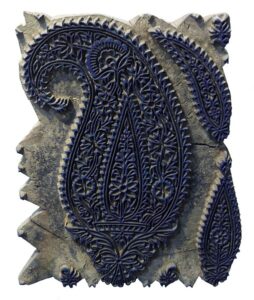
The origins of the Persian Bote Jeghe design can be traced back to ancient civilizations such as Elamite, Assyrian, and Achaemenid art. Scholars suggest that its inspiration is linked to several natural and spiritual symbols—the sacred fire, pine tree, almond, pear, and even the flowing shape of the Jhelum River (Jumna), which runs from the Kashmir Valley to India.
Many historians believe that the Bote Jeghe has Zoroastrian roots, representing the cypress tree, a symbol of freedom and resilience in Iranian culture. The curve of the cypress was seen as a gesture of humility before divine power, while others interpret it as a symbol of endurance—bowed but unbroken against the storms of time.
According to Dehkhoda, one of Iran’s greatest lexicographers, the pattern originated from bird feathers that once adorned the crowns of Persian kings.
Historical Significance and Spread
The beauty and symbolism of the Bote Jeghe soon transcended Persia’s borders and became beloved across the East. In 1949, during excavations in the Pazyryk Valley of Siberia, Russian archaeologists discovered a leather flask decorated with a Bote Jeghe design—the oldest known artifact featuring this motif, dating back more than two thousand years.
Over millennia, this elegant design evolved under the influence of ancient myths, Iranian spirituality, and social changes, taking on different forms while preserving its essence.
Some scholars argue that the pattern originated in India, inspired by native plants and motifs, and was later brought to Iran. However, historical and archaeological evidence strongly supports the Persian origin, linking it to early Achaemenid art and the symbolism of the cypress tree.
The Artistic Legacy of Bote Jeghe
From the 8th millennium BCE to the Achaemenid era, Bote designs were widely used in Iranian decorative arts—often depicting almond-like shapes or stylized leaves. One of the oldest examples appears on Elamite-Assyrian carvings, dated to around 3000 BCE, showing a vase adorned with two delicate leaf motifs resembling early forms of the Bote Jeghe.
Today, this timeless design continues to be a symbol of Persian identity, appearing not only in traditional crafts but also in modern fashion, textiles, and global design trends.

 All products

