
Sheikh Lotfollah Mosque

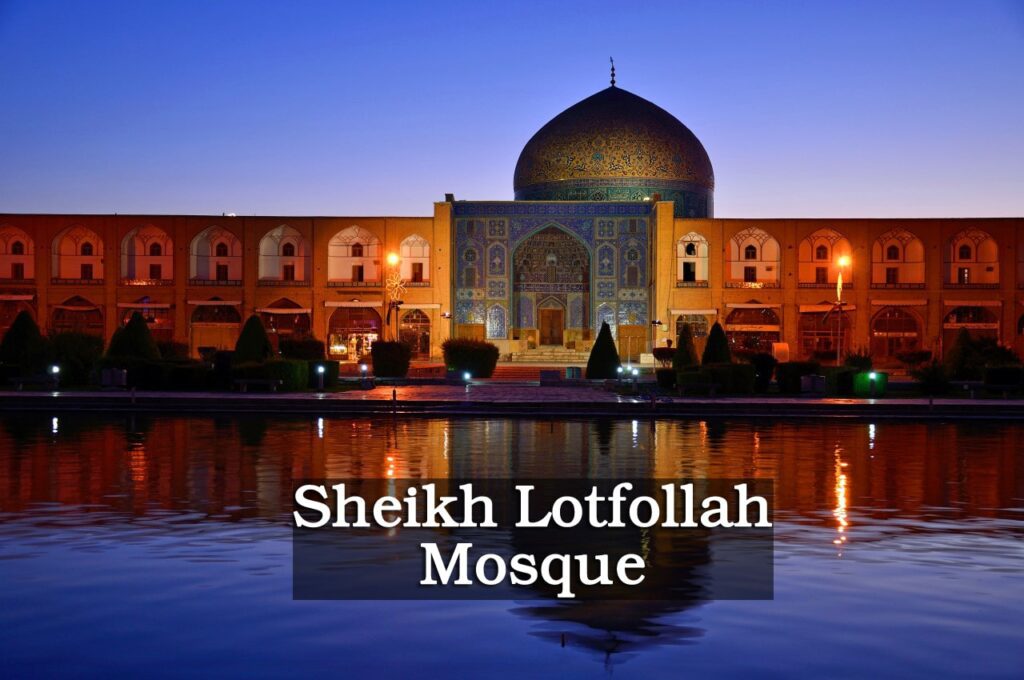
Sheikh Lotfollah Mosque: A Safavid Architectural Masterpiece in Isfahan
Sheikh Lotfollah Mosque, built between 1602 and 1619 AD, is one of the most famous historical mosques in Isfahan, located on the eastern side of Naghsh Jahan Square. Constructed during the Safavid period, this mosque is celebrated as a masterpiece of Islamic architecture and tilework of the 11th century AH. Its architect, Professor Mohammad Reza Isfahani, is regarded as one of the most prominent designers of that era.
History and Construction
Ordered by Shah Abbas I, the mosque took eighteen years to complete. It stands opposite Ali Qapu Palace and near the Shah Mosque, forming an integral part of Isfahan’s Safavid urban landscape. The mosque was dedicated to Sheikh Lotfollah Jabal Ameli, a renowned scholar of the Safavid era and father-in-law of Shah Abbas, who taught jurisprudence and led religious gatherings here.
In the 1920s, on the recommendation of Arthur Pope, Reza Shah commissioned the full restoration of Sheikh Lotfollah Mosque, preserving its intricate design and heritage.
Architectural Significance
Constructed during the flourishing period of Safavid architecture, Sheikh Lotfollah Mosque reflects the pinnacle of Islamic design, geometry, and aesthetics. The mosque was built on the site of a former mosque and showcases an extraordinary dome, delicate tilework, and precise architectural symmetry.
Louis Kahn, the world-renowned architect, once remarked about Sheikh Lotfollah Mosque:
“I can only imagine such a work in the imaginary world with a substance of gold and silver.”
Arthur Pope also praised the mosque’s perfection, noting that:
“The slightest weakness is not seen in this building. Its dimensions are harmonious, the design is strong and elegant, and it represents a glorious balance between awe and serene beauty, inspired purely by religious faith and heavenly inspiration.”
Religious and Cultural Importance
The mosque served not only as a place of worship but also as a center of Shiite learning and Friday prayers, performed according to Sheikh Lotfollah’s istifta, allowing congregations to follow in the absence of the Twelfth Imam. It symbolized the Safavid government’s dedication to Islam and Shiite scholarship, honoring religious leaders like Sheikh Lotfollah.
Why Visit Sheikh Lotfollah Mosque
Visitors today can admire:
- The ornate tilework and intricate mosaics
- The harmonious dome design and symmetry
- Its historical connection to Shah Abbas I and Safavid scholars
- The serene ambiance that reflects religious devotion and Persian artistry
Sheikh Lotfollah Mosque remains a must-see destination in Isfahan, showcasing the grandeur and spiritual depth of Safavid architecture.

 All products

