
The Persian Setar: A Soulful Instrument That Speaks Through Silence


The Persian Setar: A Soulful Instrument That Speaks Through Silence
Among all Persian musical instruments, few capture the depth of emotion and tranquility like the Persian Setar. Its sound is not merely music — it’s poetry in motion, a voice that echoes from the heart of solitude. The Setar invites the listener into a meditative state, where every note feels like a whisper of history, culture, and spirit.
If you’ve ever heard the Setar’s delicate resonance, you know it carries something deeply human — a sound that bridges earth and soul. In this guide, we’ll explore everything you need to know about the Persian Setar: its history, structure, symbolism, and how to play, tune, and care for it. And if you’re thinking of bringing one home, EliPersia.com is the perfect destination to buy authentic handcrafted Setars made by master artisans.
What Is a Persian Setar?
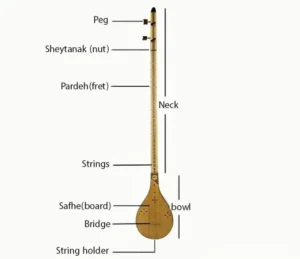
The Setar is a four-stringed Persian lute belonging to the family of traditional Iranian instruments. Its name comes from Persian words “se” (three) and “tar” (string), referring to its original three-string design. The fourth string was added in the 18th century to expand its tonal depth and versatility.
Despite its simplicity, the Setar’s gentle tone has made it one of the most beloved instruments in Persian classical music. Its sound is soft yet expressive — ideal for solo performances, spiritual compositions, and intimate gatherings.
Anatomy of the Setar
A well-crafted Setar is a masterpiece of precision and natural materials:
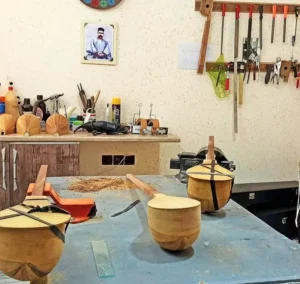
- Body (Bowl): Traditionally carved from mulberry wood for its warm, resonant tone.
- Neck: Long and slender, featuring movable frets that allow the musician to play microtones found in Persian music.
- Strings: Four metal strings, each with a specific role — from bright treble tones to deep, soulful bass notes.
Playing the Setar: A Touch of Fingertip Artistry
Unlike other string instruments, the Setar is played using the nail of the right index finger instead of a pick. This gives the musician fine control over dynamics, rhythm, and emotional nuance. The left hand delicately presses on the frets, producing gliding, fluid tones that feel almost like human speech.
Setar vs. Tar: While both are iconic Iranian instruments, the Tar is louder and more suited for ensemble performances. The Setar, in contrast, is subtle and introspective — often played in solitude or during meditative sessions.
A Journey Through Time: The History of the Setar
The Setar’s origins date back to the Abbasid era, where it evolved from earlier instruments like the Tanbur. For centuries, it was a symbol of introspection — played in private gatherings, mystical ceremonies, and spiritual compositions.
By the early 20th century, the instrument nearly disappeared, overshadowed by louder instruments like the Tar and Santur. But in the 1970s, masters such as Mohammad-Reza Lotfi, Hossein Alizadeh, and Dariush Talai revived the Setar on stage, introducing its ethereal sound to modern audiences worldwide.
Persian Setar vs. Indian Sitar
Although their names sound similar, the Persian Setar and the Indian Sitar are fundamentally different. The Setar is smaller, has only four strings, and produces a quiet, meditative tone. The Sitar, by contrast, features sympathetic strings and a richer, more complex resonance used in Indian classical music.
If you seek serenity and emotional depth, the Persian Setar’s voice is unmatched.
How to Play, Tune, and Care for a Setar
Learning to Play:
Beginners should focus on correct finger placement, right-hand nail technique, and Persian modal systems (known as Dastgahs). Online tutorials and Setar courses can help develop technique and musical sensitivity.
Tuning the Setar:
The standard tuning usually follows:
- First string – high tone
- Second string – mid tone (zir)
- Third string – lower mid tone (second zir)
- Fourth string – deep bass (Moshtagh string)
Maintenance Tips:
- Keep your Setar in a protective case away from humidity or heat.
- Regularly replace old or rusty strings.
- Wipe the body with a soft cloth and occasionally apply a light layer of almond oil (avoid strings).
With proper care, a Setar can last a lifetime, maintaining its unique warmth and resonance.
Choosing the Best Setar for Beginners
When buying a Setar, craftsmanship and material are key:
- Material: Mulberry wood produces the most authentic sound.
- Frets: Check for accuracy and smooth movement.
- Price: A mid-range Setar is ideal for beginners.
You can find authentic Persian Setars handcrafted by skilled luthiers at EliPersia.com — offering worldwide delivery and guaranteed quality. Each instrument reflects centuries of Persian tradition and artistry.
Conclusion: The Soul of Persian Setar Music
The Persian Setar is more than a musical instrument — it is a spiritual companion. Its quiet, contemplative tone speaks directly to the heart, embodying the essence of Persian mysticism, poetry, and emotion.
At EliPersia.com, you can explore a curated collection of handmade Setars crafted with care and devotion. Whether you’re a beginner starting your musical journey or an experienced artist seeking an authentic Persian instrument, the Setar will connect you to a legacy that transcends time.

 All products

